Share
by anna jane begley
Speaking to former News of the World journalist Dan Evans one mild evening in July, it feels like an age ago since the phone hacking scandal that shook the press industry to its core.

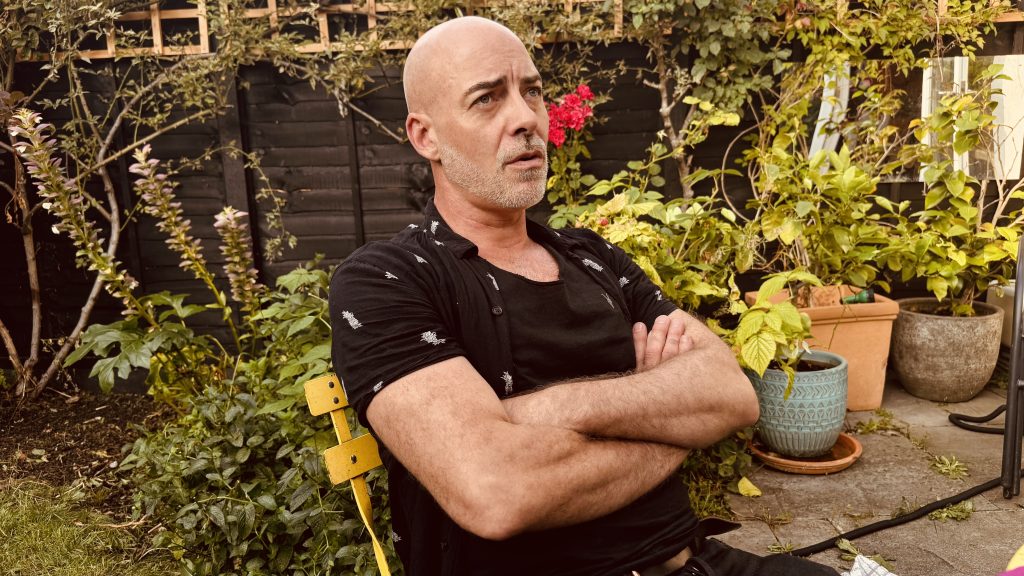
Indeed, sitting in Evans’ garden in west London, sipping San Pellegrinos and discussing the current state of journalism, it became easy to forget this eloquent and intimidatingly intelligent man once hacked more than one thousand voice messages of celebrities, sports personalities and politicians.
“I would never try and justify it,” Evans reflects. “Back then, when it came to other people’s private information, the industry was just absolutely out of control. Editors were acting like they had the powers of the State. Outrageous stuff was going on every day in every Fleet Street newsroom. Hacking and blagging were routine tools. And it is completely correct there was a reckoning through a public inquiry and the courts, even if it did get pretty messy for some of us.
“I arrived at the Sunday Mirror in 2001, as a wide-eyed kid from the provinces, into a world of dark arts. That was the context. Some of my bosses, I later learnt, had been using the full range of covert surveillance for well over a decade; trojan malware, radio-transmitter bugging, landline junction box interceptions, men in fake taxis following people around for days on end, you name it. And it was all encouraged and financed and sanctioned by the firm, which was in a kind of information arms race with its newsstand rivals, who were also all ‘at it’. So, criminality was hard-baked into the culture. You did it or you didn’t work. It really was that binary.”
Having started out as an undercover investigative reporter working in a post-9/11 world where there was a huge focus on issues like aviation security, Evans was given the job – he says “groomed” into – of being the Sunday Mirror’s dedicated phone hacker from 2003, before joining News of the World in 2005.
Evans says: “The work culture 20 years ago was pretty toxic and very thirsty. You’d often work till really late. From Tuesday until the paper went off stone on Saturday you were owned by your line managers. The pub was the stress reliever. The drinking culture was very active. Sundays off would be spent reading the papers, probably at the pub over a roast and multiple pints. Mondays you’d be glued to the phone, ringing around contacts, trying to get stories in for conference. And in my case, also hacking for the paper.
“The pressure was tectonic. At the News of the World, we had to come up with three stories at editorial conference every Tuesday morning without fail. If you hadn’t got them, you were in a lot of trouble. Professionally life wouldn’t be worth living until you did. Once my boss told me I might as well jump off a bridge if I didn’t find him a splash [front page story]. That led me directly into one infamous hack that much, much, later became a big part of my Old Bailey case. What an absolutely demented way to be living your life. Yet it was normality.”

It didn’t sound like a maintainable lifestyle?
“The alcohol was great for the old cognitive dissonance if not the liver or pay packet. It helped to block out the things we did for our papers. I couldn’t see it at the time, but the job was putting me in huge conflict with myself. The stress made me angrier, meaner, colder. I was becoming diminished as a human as a result of working in that industry. But I also desperately wanted to succeed because I had put so much in and I was good at it.”
Evans started out in local papers and felt destined for journalism from a young age.
“I loved working at the Wrexham Evening Leader. It was fun – a really buzzy news patch and a great place to develop in the job. It was a sausage factory – you could easily be writing 10 stories a day – but accountability was integral in everything you did. If you pissed someone off in print, you’d be fairly likely to bump into them in the street the next day. That keeps it honest. It could hardly have been further from the way Fleet Street was operating.”
And then one day, in an extraordinary quirk of fate, Evans’ neighbour in a tiny hamlet in North Wales “chucked an egg at [former deputy prime minister] John Prescott and got punched in the face twice for his troubles”, leading the world’s press to this doorstep.
“At the time I was Chief Reporter at The Leader and when the bloke from the Sunday Mirror knocked on our door he was just the latest in a line. We got chatting and I gave him some general pointers, since the egg-thrower himself was off-limits having signed a lucrative deal with the Mail on Sunday for his ‘exclusive’.

“The Mirror man offered to pay me “a shift” for being helpful, which was £125 in 2001. And I said ‘I don’t want any money, but can I have an actual shift please?’
“He looked a bit surprised but agreed to help me and put in a good word. Within a month, much to his shock, I had resigned from The Leader, moved to London, and rocked up at Mirror HQ in Canary Wharf.
“I had done maybe just a couple of casual shifts when 9/11 happened. Soon as I saw the first tower on fire I got straight on the phone to the newsdesk. I was like, ‘what can I do to help?’. And they said ‘go get a job as a baggage handler at Stansted airport and show how easy it would be to infiltrate an airliner’.
“So I did that and pissed around trying to take f—ing fake bombs on airplanes and photos of myself in the hold for a few weeks and it made a big impact in the paper. And it showed me that it pays to get on the front foot.”
Evans’ career escalated from there. He became the Sunday Mirror’s undercover guy.
“Every week was different. One day I was secret filming hitmen from a jacket-cam and putting them in the paper, the next I’m nicking nonces, and after that buying drugs from train guards, being a cowboy car clamper, a Traffic Warden in Soho, buying guns and devil dogs and exposing fraud gangs and infiltrating the BNP and blah blah blah blah blah it went on and on. That was the kind of work I did, and it got me the “holy grail” of a staff job at Mirror Group Newspapers.
“Within months of being taken on properly, I had a big eye opener. My bosses sat me down in a room and explained how they really got so many big scoops. They let me in on their big dirty secret – espionage, with a distinct focus on voicemail interception.

“The two top executives on my first national newspaper taught me how to hack and then fed me all the precursor information needed to make it work. They opened up their contacts books, filled as they were with decades’ worth of information on the thousands of people whose information they had already bought from private investigators.
“So they literally printed out a f—ing big stack of phone numbers and dumped them on my desk; every famous person you could think of and many more you’ve long forgotten. By this point, I was so used to taking risks for the paper every week that this seemed not so different. And suddenly I was sitting there with multiple handsets, cracking the codes.
“And I was really good at it. It’s strange to think I was probably Britain’s premier phone hacker for a while back there. It was a bit like being in the matrix, having all this information rolling around my brain. At the Sunday Mirror, I was told to focus on entertainers, sports people, politicians and the people around them.
“I had no idea what the News of the World was up to with poor Milly Dowler until Nick Davies put it in The Guardian. We met in person for the first time at the Old Bailey when I was giving evidence, and I count Nick as a friend today. He’s a fantastic reporter and occasional mentor. I’ve also met the Dowler family a few times and I know how difficult all that was for them. When I speak to victims of the industry’s horrible behaviour, and there have been many, it is always deeply humbling.”
We’re speaking a couple of months before ITV’s drama on the scandal, written by Adolescence’s Jack Thorne. The Hack, starring David Tennant, focuses on Davies uncovering the evidence that led to the closure of the News of the World after 168 years in print. Slated by some critics as dull and tedious, one might wonder whether The Hack may have made more riveting TV had it looked more at the toxic, but clearly colourful, culture at Rupert Murdoch’s then most-feared newspaper.
Evans’s transition from investigative journalist to criminal phone hacker, seems far more fascinating to me, for example.
“I came to London as a very naïve kid of 24 just wanting to use my talent and to put to use the thousands of hours of practice I put in to become the best journalist I could be. And then you go to an organisation where they’re perfectly happy to take that ambition, that talent, and exploit it in an unequal power relationship.
“It was an abuse of power on their part that I’d call corporate grooming; the people who had the ability to make or break my career sat me down, their most junior staffer, and trained me using the company’s phones and made it clear I had to do it if I wanted to get on. If I had a biggest regret it would be not telling them to stick it. But this was my editor asking and the truth is I felt lucky she even knew who I was.”
When, 10 years later, the scandal eventually exploded and, as Evans puts it “Fleet Street’s house of cards fell”, he became a key witness for the prosecution in the so-called Super Trial of the Century of his former News of the World boss Andy Coulson, who was jailed for 18-months for conspiracy to unlawfully intercept communications including over the Dowler affair, and others including former Sun editor Rebekah Brooks who was cleared of any wrongdoing. Four other senior editors and a private investigator were also convicted. For his part, Evans separately got a 10-month suspended sentence, with the judge saying his evidence was “unique”.
In the past, Evans has called for a completion of the Leveson Inquiry so that people he (and two senior High Court judges) says misled it, including some top-level journalists from other news groups, corporate lawyers, and captains of the industry, can also be held accountable.
So does he feel like a scapegoat in a much wider network of criminality?
“There is a much bigger story about the relationships of power between the Press and a recent succession of Governments which wield great influence on our criminal justice system.
“You’ve got to ask yourself why they cancelled Leveson 2? It wasn’t because of cost, or because the industry had ‘had enough’ as [former Culture Secretary] Matt Hancock put it in so many words at the time, it was because it could embarrass witnesses who misled the first part of the inquiry and potentially put them in jail.
“Which would humiliate the proprietors. Which isn’t going to be happening when politicians are only looking four years ahead.
“I look back and given the sheer scale of criminal stuff since exposed at so many newspapers through various civil court cases it’s undeniable that I was scapegoated, and took a sort of symbolic responsibility for the sins of an entire industry, which then of course did what it does, and demonised a few people involved, as a two-faced deflection from its own broad complicity.
“But in the grand scheme of things, it was for the best, albeit a double difficult journey for me personally to live through a few years of investigation and public opprobrium and seeing all those things I worked for lost, alongside much more important things.
“But it’s cool. I survived. And in fact, when it all shook out, it opened so many doors. And I got a second chance because I did everything I could to make things right and hold myself to a higher standard. And now I sleep like a baby and I have moral authority when I tell my kids right from wrong. I’m at peace with myself, which is priceless. I know there are many out there who aren’t.” Does he think the industry has made progress since the Inquiry? To me, anyway, it feels as though mainstream journalistic standards are still on the decline, with newspapers becoming increasingly polarised on the Left and Right.

“As a print journalist, it has always been the case that if you don’t provoke a strong emotional response in your reader very quickly, you lose them. One editor early in my career told me I had1.2 seconds to catch the attention or not only risk losing the cover (or paywall) price of your newspaper but an advertising target too.
“That’s one of the things about newspapers that people often overlook: while a reader might think they’re the consumer, they are also of course the product, which, in and of itself, has a potentially negative warping effect on the integrity of the message, right?
“It’s a self-fulfilling prophecy that journalistic standards, and therefore the quality of public discourse, will suffer because the MSM is chasing those hits and eyeballs in competition with Instagram and TikTok and having to abide by their methods and algorithms, which ironically enough are themselves rooted in the lessons of tabloidism the papers have been using on the public since the mid-1800s. The bottom line is that Polarisation Pays.”
It’s a sobering thought that Evans extrapolates further.
“Think about the dopamine delivery the consumption of a big shocking headline gives the human body – the thing that used to move so many of us to buy a copy – and put into an instantly consumable environment online, in which the sheer volume of potent messaging from all directions has stripped out space for nuance, creating this black and white ‘I’m right, you’re wrong’ approach to public debate. Chuck in all those attention-grabbing clicks and dings and haptic buzzes, which I equate to the old school tricks of page design which bounced a reader’s eye to where it was wanted, and you have tabloidism on steroids, basically.
“And that’s resulted in this huge polarising situation, which is also often by design, because you’ve got the influence of big actors, state actors, on the media ecosystem. Whether it’s the propaganda/ fake news farms in Russia or elsewhere, whose deliberate intention is to undermine public confidence in enemy societies, sewing doubt in the West and Europe, with the intention of throwing the established order off balance. I call it the BBB technique, or Bulls—t Baffles Brains. But you might just as well call it KGB 101.”
Evans is now a founding editor of two independent news platforms – bylineinvestigates.com and a new one soon to be announced – a broadcaster, writer, and strategic communications expert. He’s also part of the duo that exposed the Dan Wootton catfishing scandal in 2023, after a three-year deep investigation working with former NotW colleague Tom Latchem on a story that stunned the media world. The pair have also been investigating sex trafficking and abuse in British television in a major series on the missing rugby union player and X Factor star Levi Davis published in Byline Times.
You can tell Evans gets a real kick out of his job. Now, having made a point of owning and rectifying things in his own professional past, he puts great faith in the founding principles of ethical journalism.

He says: “It’s a vocation. Don’t do this job because it’s easy. It’s not. It’s abnormally stressful and the risks associated, particularly as an independent journalist, are astronomical if you want to write anything really interesting. Also, do it for love, as the money can be fairly shitty. News outlets pay less than ever today, and it’s perilous as a freelance, although there are definitely ways to make a living for the enterprising scribe – Substack for example – even though it’s true that long-form journalism is falling into decline as attention spans shorten.”
But when it’s good it’s good right?
“All that said, the feeling of doing important work, and seeing your story go around the world, is like no other. It’s great. Emotionally, it can be a really rewarding occupation. For example, with the Levi Davis case, having the opportunity to get to know the people who loved him, and to have their appreciation just for being present on that story when all others had turned away, is an honour. I’ve spoken to well over 50 people over the course of 18 months, flown to Barcelona with his family, got the Catalan police report for the first time, and found glaring holes in it and serious questions to answer for them and others.”
How do you even begin to work on a sensitive story like that?
“You approach it very respectfully and always remember that it is not a story to the people involved; it’s their life and it really matters. I think maybe my own experiences with being on both sides of ‘the story’ have really made me appreciate. It’s definitely made me a better journalist.
“That and the responsibility of being a publisher as well as an author. I always think that you’re not really a grown-up reporter until you have really put something on the line to get a story out. People might take risks on someone else’s dime that they simply wouldn’t on their own.”

Do you think certain character traits make for good reporters?
“For sure. Curiosity and stamina are absolutely critical. It helps if you can write a bit too but that’s not an absolute deal breaker if you are a great story-getter, especially in an AI world. Generally good journalists are often naturally quite empathic. You need that to feel the human shape of a story, because stories are not just collections of (sacred) facts, they’re ideally dispassionate mediations of ‘reality’ that unite rigorous accuracy and transparency into something relatable and human. One of the most revealing questions I find when interviewing people is always ‘how did that make you feel?’. It’s surprising how often the answer informs your treatment when you come to write.”
When you do these stories, I ask, do you sometimes feel you lose some of your soul as well? There must be so much attachment?
“I definitely engage on a root-access level with big projects but I don’t lose any soul, no. Sure there is a huge personal commitment there, but it is generally a soul-nourishing experience, because you’re doing it in the public interest for the right reasons. I have experienced the inverse situation in the Wild West hacking days, working in abusive organisations, dealing with exploitative people, and that cost me a little bit of who l was, maybe, but actually the bit of me it took away I didn’t like that much anyway so they’re welcome to it.”
What advice would you give young people aspiring to be investigative journalists?
“1. First and foremost, hold yourself to the highest standards you can. If you don’t, then the world will. 2. Act with integrity when faced with things you disagree with in the workplace. If it feels wrong to you inside, don’t do it. 3. Respond, don’t react. If you’re being triggered at work, count to 10, take advice from trusted independent counsel, and be proportionate. 4. When you are having a tough conversation with someone (including yourself) be kind, or at least assiduously neutral. You don’t want unnecessary afters. 5. If you work in a big news organisation, try not to drink the corporate Kool Aid, because it’ll detach you from reality in a heartbeat. 6. Have two recorders running when you have one shot at it. 7. Don’t fear AI, it’s an incredible tool for investigate journalism, so lean into it and educate yourself. 8. Always, always, shut the gate behind you.”

Final question: How has this interview made you feel?
“Thanks for asking! It’s made me feel very lucky to be here and able to share a bit of hard-earned wisdom and reflect on the absolutely banging journalism I get to do.”
pictures by /ash